
1980: Corbin Returns to the Top and Sends Archie Powers Out a Champion
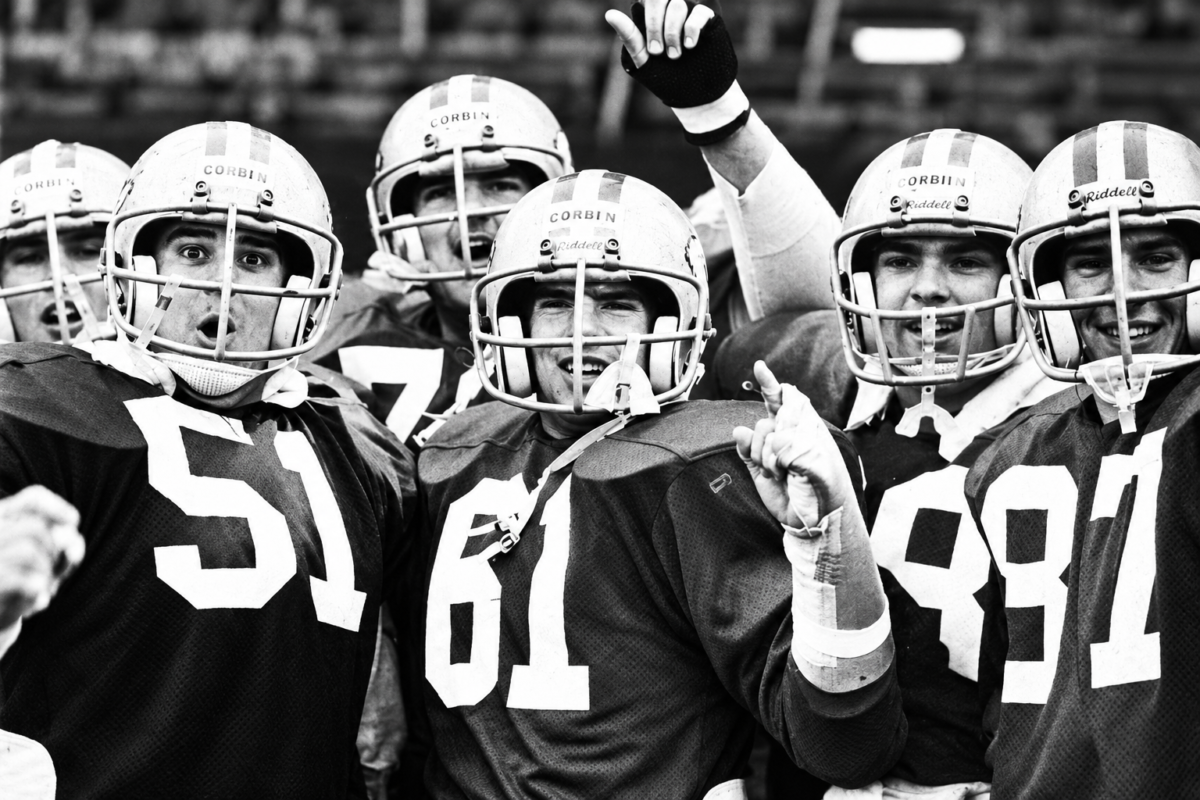
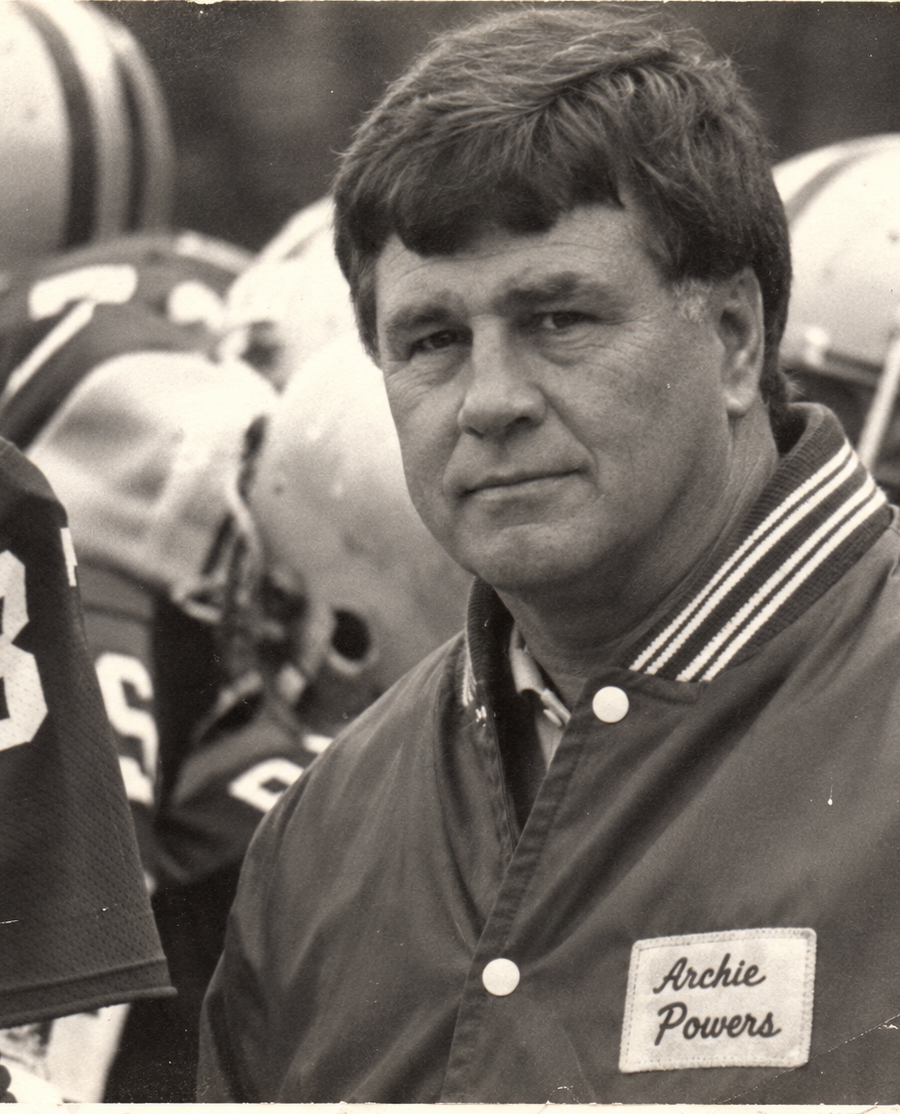
Four years after Archie Powers took Corbin to the top of Class 2A football, the Redhounds spent the fall of 1980 proving they were not finished.
Corbin had already established itself as one of Kentucky’s premier programs during the second half of the 1970s. The Redhounds won the state championship in 1976, returned to the final in 1977 and lost to Mayfield by a single point, and remained a fixture among the teams expected to contend when the playoffs arrived.
The 1980 team added another championship to that run.
Corbin finished 13 and 1 and defeated defending state champion Fort Campbell, 16 to 7, at Cardinal Stadium in Louisville to capture the Class 2A championship. Ritchie Grigsby scored both Corbin touchdowns in the final, Greg Taylor provided a two point conversion, and the Redhound defense held Fort Campbell scoreless over the final three quarters.
The championship became the final season of Powers’ tenure at Corbin and one of the defining accomplishments of an era that had restored the Redhounds to statewide prominence.
There was plenty of experience around the program by 1980. Powers had spent more than a decade building Corbin from the line of scrimmage outward, and Larry “Cotton” Adams remained one of the central members of his staff. Adams had joined the program in 1968 and stayed when Powers became head coach, working extensively with the offensive and defensive lines.
Together, they had established a formula that was hardly complicated.
Corbin wanted to be physical.
The Redhounds wanted to run the football, control the line of scrimmage and play defense. They were willing to win games without putting enormous numbers on the scoreboard and had already demonstrated that approach on the biggest stage.
The 1976 championship team defeated Mayfield, 6 to 0.
The 1977 team returned to the final and lost, 14 to 13.
By 1980, another generation of Redhounds had grown up inside those expectations.
Among the players on the team was Ritchie Grigsby, whose name would eventually become permanently attached to the championship game. Greg Taylor would also play an important role in Louisville. A younger Tommy Greer was part of the program as well, beginning a connection with Corbin football that would eventually stretch across decades.
Greer would later score a touchdown in Corbin’s 1982 championship victory over Glasgow, play college football at Western Kentucky and eventually return to Corbin as head coach.
In 1980, however, those future chapters had not been written.
There was a championship to chase.
The Redhounds put together one of the strongest regular seasons of the Powers era. Corbin won 10 games before the postseason and entered the Class 2A playoffs with only one defeat.
The record was impressive, but the schedule had also prepared Corbin for the type of football it would see in November. The Redhounds had spent years playing traditional rivals and strong programs from around southeastern Kentucky, and Powers had never shown much interest in protecting a record at the expense of preparing his team for the postseason.
By November, Corbin was ready.
The playoff structure of the period offered no room for a bad night. There were fewer rounds than the modern postseason, and one loss immediately ended the season. Corbin had already experienced both sides of that reality during the previous championship runs.
In 1976, the Redhounds had survived the postseason and beaten Mayfield.
In 1977, one point had separated Corbin from another championship.
The players on the 1980 team understood the standard.
They also understood that the success of previous teams guaranteed them nothing.
Corbin had to earn another trip to Louisville.
The Redhounds did exactly that.
As the postseason progressed, Corbin continued to rely on the identity Powers and his staff had established. The defense kept opponents under control, the running game gave Corbin an ability to manage games and the Redhounds advanced until only one opponent remained.
That opponent was Fort Campbell.
There was no question about the quality of the team waiting for Corbin at Cardinal Stadium.
Fort Campbell was the defending Class 2A state champion and one of the hottest programs in Kentucky football. Under coach Marshall Patterson, the Falcons had developed into a championship machine.
Patterson had started the Fort Campbell football program in 1962 and steadily built it into a statewide power. The Falcons won the Class A championship in 1976, returned to the championship game in 1978 and defeated Paintsville, 15 to 13, for another title. Fort Campbell moved into Class 2A and immediately won again in 1979, shutting out Pikeville, 26 to 0.
By the time the Falcons arrived in Louisville to face Corbin in 1980, they were playing in their third consecutive state championship game and attempting to win a third consecutive title.
Fort Campbell had no intention of giving up the championship easily.
The Falcons showed it almost immediately.
Kevin Extine broke free for a 37 yard touchdown run in the first quarter, and Darrell Stewart kicked the extra point.
Fort Campbell led, 7 to 0.
For the defending champions, it was an ideal beginning. They had struck first and put Corbin in the unfamiliar position of having to chase the game.
The Redhounds never panicked.
Corbin responded in the second quarter by doing what Powers teams had done for years.
They ran the football.
Grigsby finished the drive with a 1 yard touchdown run, cutting the Fort Campbell lead to one point.
Powers did not settle for the tie.
Corbin went for two.
Taylor carried the ball across the goal line for the conversion.
Corbin 8, Fort Campbell 7.
The Redhounds had taken the lead.
Nobody knew it at the time, but Fort Campbell had already scored its final points of the season.
Corbin’s defense took over from there.
The Falcons had reached the end zone on Extine’s 37 yard run in the opening quarter, but the Redhounds refused to allow another score before halftime.
Corbin went to the locker room leading by a point.
The third quarter became the kind of football game Powers had spent years preparing his teams to win.
Neither side scored.
Fort Campbell remained within one point, meaning a field goal could put the Falcons back in front. Corbin had no cushion and no opportunity to relax. Every possession mattered.
The championship entered the fourth quarter with the Redhounds leading, 8 to 7.
Twelve minutes separated Corbin from another state title.
Grigsby provided the play that finally gave the Redhounds some room.
He broke loose for a 17 yard touchdown run, his second score of the afternoon.
Corbin added the conversion.
The lead was 16 to 7.
For the first time, Fort Campbell needed more than one scoring possession.
Against Corbin’s defense, that proved too much.
The Falcons never scored again.
The same Fort Campbell program that had won consecutive championships and arrived in Louisville seeking a third straight title had been shut out for the final three quarters.
When the clock expired at Cardinal Stadium, the scoreboard showed Corbin 16 and Fort Campbell 7.
The championship belonged to the Redhounds.
For Grigsby, the game became the defining performance of his Corbin career. He scored both touchdowns against the defending champions, first from a yard out to bring Corbin back into the game and then from 17 yards in the fourth quarter to provide the final separation.
Taylor’s conversion after the first touchdown was just as important.
Without it, Corbin would have been tied 7 to 7.
Instead, the Redhounds went ahead 8 to 7 and never trailed again.
Those details reflected what championship football often looked like during the era.
Every point mattered.
Corbin knew that better than almost anyone.
Three years earlier, the Redhounds had lost the state championship to Mayfield, 14 to 13. One point had prevented Corbin from winning consecutive championships in 1976 and 1977.
Against Fort Campbell, Powers took the opportunity to gain that extra point.
Taylor delivered it.
The defense made it stand.
The championship completed a 13 and 1 season and gave Powers his second state title at Corbin.
It also became his last.
After years of rebuilding the program and turning the Redhounds into one of Kentucky’s most consistent Class 2A contenders, Powers stepped away following the championship season.
His record during the peak of the program spoke for itself.
Corbin won the 1976 state championship.
The Redhounds returned to the final in 1977 and lost by one.
They won again in 1980.
Three championship appearances in five seasons had established Corbin as one of the premier programs in Kentucky.
The transition that followed could have disrupted everything Powers had built.
Instead, Corbin turned to someone who had been there throughout the process.
Cotton Adams.
Adams had been a Corbin player.
He had been part of the 1962 state runner up team.
He had returned home as an assistant coach.
He had helped Powers rebuild the program.
He had coached the lines on the championship teams of 1976 and 1980.
Now the program would be his.
The decision created continuity at a time when Corbin could easily have gone in another direction.
Many of the players already knew Adams. They knew his expectations and understood that the physical style established under Powers was not about to disappear.
Among the players who would remain important in the years ahead was Greer.
Two seasons later, Corbin returned to the state championship game under Adams.
The 1982 Redhounds did not have a perfect regular season. They lost four games and endured enough adversity that Adams later joked about a petition being circulated calling for him to be fired.
They survived it.
Corbin reached Louisville and defeated Glasgow, 18 to 6, after the championship game remained scoreless through three quarters.
Greer scored on a 5 yard touchdown run in that fourth quarter.
The connection between the 1980 and 1982 teams demonstrated how strong the program had become.
Corbin did not need to rebuild after Powers left.
The championship culture remained.
That is part of what makes the 1980 team so important.
It represented both an ending and a beginning.
It was the final championship team coached by Powers and the team that handed the program to Adams with the standard intact.
The Redhounds had won championships before Powers.
They would win another after him.
But the era he built changed the expectations surrounding Corbin football.
From 1976 through 1980, the Redhounds had played for three state championships.
They won two.
The only loss came by one point.
The 1980 team also accomplished something that deserves to stand on its own.
It stopped a dynasty.
Fort Campbell did not arrive at Cardinal Stadium as an ordinary championship opponent. The Falcons were trying to win their third consecutive state title. They had won championships in different classifications and had developed into one of Kentucky’s most successful programs.
Corbin fell behind them 7 to 0.
Then the Redhounds shut them out for the rest of the afternoon.
Grigsby scored twice.
Taylor supplied the conversion that gave Corbin the lead.
The defense handled everything else.
That was Corbin football under Powers.
Physical.
Patient.
Comfortable in close games.
Built to defend.
Capable of winning when the margin for error disappeared.
The final game captured all of it.
Fort Campbell scored first.
Corbin answered.
The Falcons entered the fourth quarter only one point behind.
Corbin finished.
When the Redhounds returned home from Louisville, they brought another championship with them.
For the seniors, it was the conclusion of their Corbin careers.
For the younger players, it became the standard they inherited.
For Powers, it was the final statement of a tenure that had restored Corbin to the top of Kentucky high school football.
And for the program, it was not the end of the championship era.
Another title was only two years away.
The 1980 season would always belong to the men who played it, however. They had won 13 games. They had survived the Class 2A postseason. They had faced the defending state champions with everything at stake and responded after falling behind.
The final scoreboard at Cardinal Stadium preserved the result.
Corbin 16, Fort Campbell 7.
Thirteen wins.
One loss.
Class 2A state champions.
Archie Powers walked away a champion.
And Corbin football remained exactly where he had spent years building it to be.
At the top.
13 games
- 23 Sat Aug vs Mayfield Neutral L 7-18
- 29 Fri Aug at Hazard Away·Daniel Field W 28-12
- 5 Fri Sep vs Pineville Home·Campbell Field W 42-7
-
12
Fri Sep
 vs Whitley County
Home·Campbell Field
W
49-0
vs Whitley County
Home·Campbell Field
W
49-0
- 19 Fri Sep vs Glasgow Home·Campbell Field L 27-28
- 25 Thu Sep at Danville Away·Admiral Stadium L 6-10
- 10 Fri Oct vs Evarts Home·Campbell Field W 56-0
-
17
Fri Oct
 vs Somerset
Home·Campbell Field
W
42-0
vs Somerset
Home·Campbell Field
W
42-0
- 24 Fri Oct at Knox Central Away W 43-6
-
1
Sat Nov
 at Middlesboro
Away·Bradner Stadium
W
15-14
at Middlesboro
Away·Bradner Stadium
W
15-14
-
14
Fri Nov
 vs Russell County
Home·Campbell Field ·KHSAA Playoffs
W
47-8
vs Russell County
Home·Campbell Field ·KHSAA Playoffs
W
47-8
- 21 Fri Nov at Pikeville Away ·KHSAA Playoffs W 42-13
- 28 Fri Nov vs Fort Campbell Neutral·Cardinal Stadium ·KHSAA State Championship W 16-7
Notes. Only the state final is documented so far. Regular-season results, roster and record still to be researched.
Source KHSAA, KHSAA football state championship history (past winners), Verified September 7, 2026 View source Head coach, opponent, score and site from the KHSAA state championship history.