
1976: The Season Corbin Football Returned to the Top of Kentucky
The final score was only 6 to 0, but the championship Corbin won in 1976 had been years in the making.
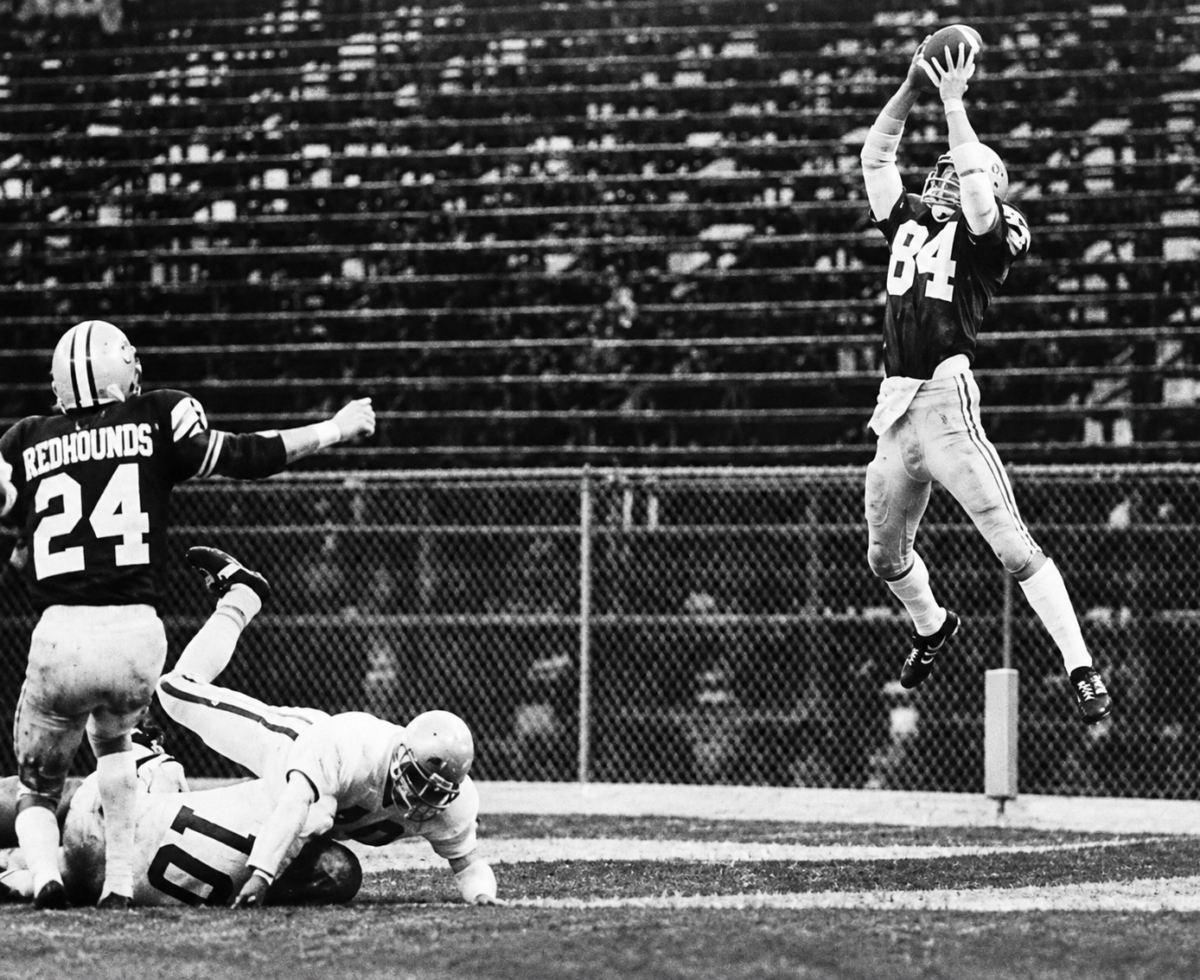
When Tom Horvath found Kenny Gilbert for a 29 yard touchdown pass in the third quarter of the Class 2A state championship game at Commonwealth Stadium, nobody knew those six points would be the only points scored that afternoon. Nobody knew Corbin’s defense would spend the rest of the game protecting them or that Mayfield, a team that had scored 69 points in its first two playoff games, would leave Lexington without scoring at all.
What the people from Corbin did know was how long they had waited for another football team to reach the top of Kentucky.
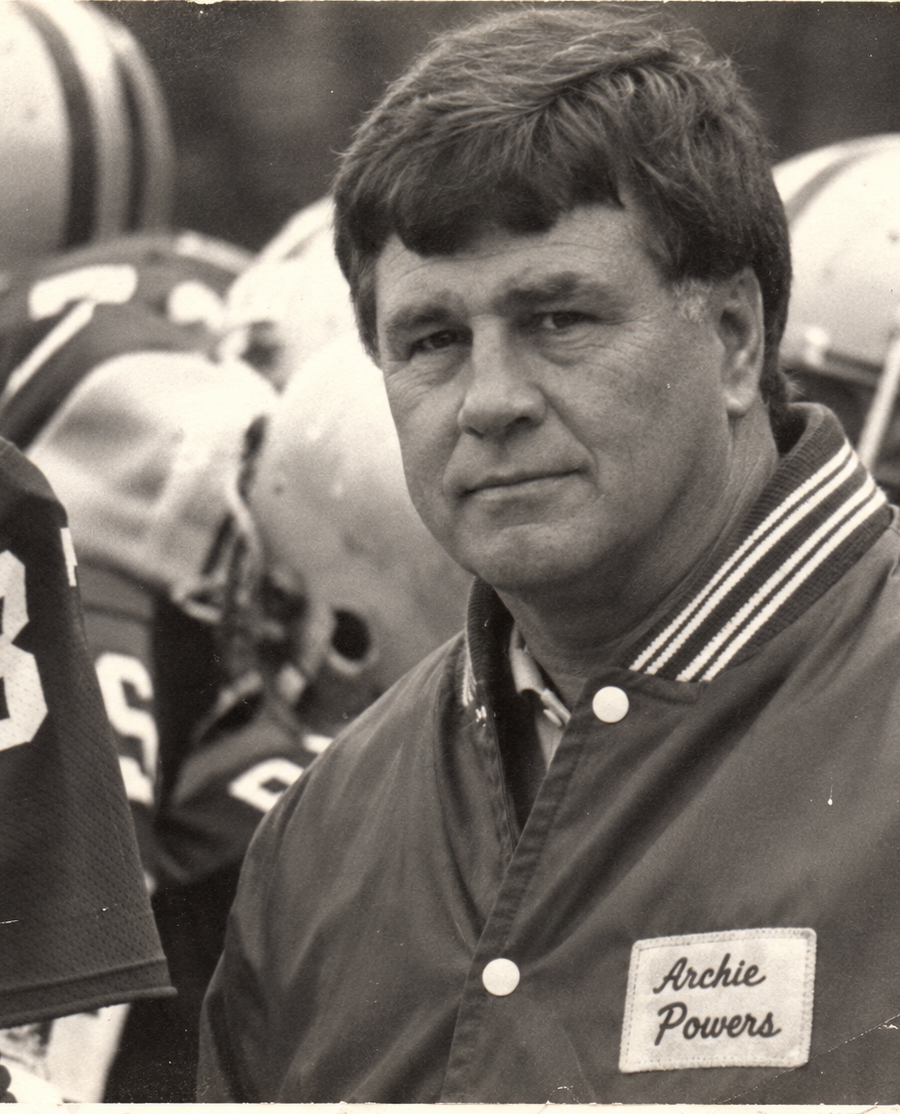
The Redhounds defeated Mayfield, 6 to 0, to win the 1976 Class 2A state championship, completing an 11 and 1 season and giving coach Archie Powers the championship toward which he had been building the program for years. It was Corbin’s first championship of the official KHSAA playoff era and the beginning of a seven year stretch in which the Redhounds would reach four state championship games and win three of them.
The championship game eventually became the part everybody remembered, but the 1976 Redhounds were much more than one touchdown pass in Lexington. They were a veteran, physical football team built around the principles Powers and his coaching staff had established during Corbin’s climb back into statewide contention. They could run the football, control field position and, most importantly, defend.
That defense ultimately became the identity of a championship team.
Powers had arrived in Corbin several years earlier with a program that needed rebuilding. Larry “Cotton” Adams had returned to his hometown after playing college football at Dakota Wesleyan and joined the Corbin staff in 1968. Powers took over the Redhounds the following season, with Adams remaining as an assistant and working primarily with the offensive and defensive lines.
The combination proved successful.
Adams knew what championship expectations felt like in Corbin because he had experienced them from almost every angle. As a boy, he had watched the unbeaten 1955 Redhounds and Calvin Bird. As a player, he had been an offensive lineman on Corbin’s 1962 state runner up team. That team beat two time defending champion Highlands, 10 to 0, in the semifinal before losing to Danville, 13 to 6, in the championship game.
When Adams returned as a coach, Corbin was not operating at that level.
Powers and his staff changed it.
The rebuilding process was not accomplished in a season. Corbin developed its younger players, strengthened the program from the line of scrimmage outward and gradually returned to the point where playing deep into November became an expectation rather than a memory.
By 1976, the pieces were there.
Horvath directed the offense at quarterback. Gilbert gave the Redhounds a receiving threat capable of making the kind of play that would eventually decide a state championship. Up front, players such as senior Ray White represented the physical style Powers and Adams demanded. White was a three year letterman at Corbin and earned honorable mention All-State recognition before continuing his career at Western Kentucky.
The names mattered, but so did the way Corbin played.
The Redhounds were comfortable in games that other teams might find uncomfortable. They did not need an open field shootout. They did not need to score four or five touchdowns to believe they were in control. If the game became a fight for field position and every yard had to be earned, Corbin was perfectly willing to play that way.
One of the best examples came against Somerset.
The Briar Jumpers were a legitimate Class 2A contender and one of the programs Corbin had to deal with in its own part of the state. When the teams met during the regular season in October, neither offense could establish control.
Corbin won, 6 to 0.
It was hardly the type of score that attracted attention because of offensive fireworks, but it told plenty about the Redhounds. Against a good opponent, Corbin found six points and made them stand.
That formula would look familiar several weeks later.
The victory over Somerset also became more important because the teams were not finished with one another. When the Class 2A playoffs began, Corbin’s first opponent was Somerset again.
There are few things more difficult in high school football than beating a good team twice in the same season. The second meeting eliminates much of the uncertainty that exists the first time. Coaches have film. Players know one another. Strengths have already been exposed, and weaknesses have already been tested.
Somerset knew Corbin.
Corbin knew Somerset.
The Redhounds beat them again.
This time the margin was considerably larger.
Corbin defeated Somerset, 22 to 8, and advanced in the Class 2A playoffs.
The difference between the two games was significant. Corbin had needed only six points to win the regular-season meeting. In the postseason, with Somerset playing for its season and fully aware of what the Redhounds wanted to do, Corbin produced 22.
The championship run was underway.
Whitesburg stood between Corbin and a trip to the state championship game.
For Powers and his players, the stakes were obvious. Corbin’s football history included championship teams from the pre-playoff era and the 1962 state runner up, but the current generation had an opportunity to establish an identity of its own.
The Redhounds got past Whitesburg.
Corbin was going to Commonwealth Stadium.
Waiting there was Mayfield.
If Corbin represented one end of Kentucky’s Class 2A football map, Mayfield represented the other. Jack Morris had built the Cardinals into one of western Kentucky’s premier programs, and Mayfield arrived in Lexington with a 12 and 1 record.
The Cardinals had been devastating in their first playoff game.
Mayfield beat Edmonson County, 48 to 6.
The semifinal provided a tougher test, but the Cardinals handled Bardstown, 21 to 7.
Two playoff games.
Sixty nine points.
Mayfield had every reason to believe its offense could score against anybody in Class 2A.
Corbin had every reason to believe otherwise.
The Redhounds had already spent a season proving that defense could carry them when necessary. They had shut out Somerset in a six point game and had survived enough difficult football to know that a championship did not have to be pretty.
That became apparent almost immediately at Commonwealth Stadium.
The first quarter ended without a score.
Mayfield had not found the end zone.
Neither had Corbin.
The second quarter produced the same result.
At halftime, the scoreboard still showed Corbin 0 and Mayfield 0.
For Mayfield, the game had become something very different from its previous two postseason victories. The Cardinals had scored 48 points in their playoff opener and 21 in the semifinal. Against Corbin, 24 minutes had passed without a point.
For the Redhounds, there was little reason to panic.
They had been here before.
The regular-season game against Somerset had required patience. Corbin had won that night with six points.
Now a state championship might require the same thing.
The play finally came in the third quarter.
Horvath looked downfield and found Gilbert.
Twenty nine yards later, Corbin was in the end zone.
Gilbert’s touchdown reception gave the Redhounds a 6 to 0 lead. The extra point attempt failed, keeping Mayfield within one touchdown of taking the lead.
There was still plenty of football remaining.
For Corbin’s defense, the assignment could not have been clearer.
Protect six points.
Mayfield spent the remainder of the third quarter trying to answer. Corbin refused to allow it.
The game moved into the fourth quarter with the Redhounds still leading 6 to 0.
Every Mayfield possession carried the possibility of changing the championship. One touchdown and successful extra point would put the Cardinals ahead. Corbin’s offense had not produced enough separation to give the defense any room for a mistake.
The defense did not need any.
Mayfield never scored.
The Cardinals had entered Commonwealth Stadium with 69 points in two postseason games and a 12 and 1 record. They left with a zero.
When the fourth quarter ended, the six points produced by Horvath and Gilbert remained the only points scored in the Class 2A championship game.
Corbin 6.
Mayfield 0.
For Powers, it was the culmination of the rebuilding job he had undertaken years earlier. Corbin was no longer a program trying to return to its past.
The Redhounds had created something new.
The championship also belonged to a coaching staff that had developed the team from the line of scrimmage outward. Adams had spent years coaching Corbin’s offensive and defensive linemen, teaching the techniques that allowed the Redhounds to play the physical style that became their trademark.
Players such as White were products of that system.
White graduated from Corbin in 1976 after earning three football letters and honorable mention All-State recognition. He went on to Western Kentucky, where he was listed as a 6 foot 1, 210 pound center. His presence in the championship team’s senior class provides a glimpse of what Powers and Adams valued.
Corbin wanted linemen who could play.
Everything else was built from there.
Horvath and Gilbert provided the championship game’s defining offensive moment, but the title itself was won by an entire team capable of holding one of Kentucky’s best Class 2A offenses scoreless for four quarters.
That is why the final score remains such a fitting summary of the 1976 Redhounds.
Six to zero.
There was nothing excessive about it.
Corbin scored once.
Mayfield never did.
The championship also announced the beginning of a rivalry between two programs that would spend the next several seasons around the top of Class 2A football.
One year later, Corbin and Mayfield were back in the state championship game.
The 1977 final was dramatically different. Mayfield won, 14 to 13, denying Corbin consecutive championships by a single point.
The Cardinals returned again in 1978 and defeated Somerset, 22 to 6, to win another state championship.
During that three year period, Mayfield became one of the defining programs in Class 2A.
So did Corbin.
The Redhounds’ loss in the 1977 final did not end the championship era Powers had built. Corbin returned to the top in 1980, defeating defending champion Fort Campbell, 16 to 7, at Cardinal Stadium in Louisville.
That became Powers’ final championship at Corbin.
Adams succeeded him after the 1980 season.
Two years later, Adams led the Redhounds to another title, defeating Glasgow, 18 to 6, after Corbin scored all 18 points in the fourth quarter.
Looking back, the numbers are remarkable.
From 1976 through 1982, Corbin reached four state championship games.
The Redhounds won three.
But before there could be 1980 or 1982, there had to be 1976.
That team established the standard.
It showed that Corbin could again compete with the best programs in Kentucky. It proved that Powers’ rebuilding project had produced more than winning seasons. It had produced a champion.
The players who made it happen became part of a lineage that stretched backward and forward through Corbin football history.
Adams had played for a state championship in 1962.
He coached a championship team in 1976.
He helped coach another in 1980.
Then he won one as head coach in 1982.
Players from the championship era would later return to Corbin themselves. The tradition continued because the people who built it rarely became completely disconnected from it.
That may be the lasting significance of the 1976 team.
It did not simply win a championship.
It changed what Corbin football expected from itself.
Winning seasons were no longer enough.
Making the playoffs was not enough.
Even reaching the state championship game would prove insufficient when Corbin lost by a point the following season.
The goal was to finish.
In 1976, Corbin finished.
The Redhounds survived the regular season with only one loss. They beat Somerset, 6 to 0, in a defensive struggle and then beat the Briar Jumpers again, 22 to 8, when the season was on the line. They got past Whitesburg to reach Lexington.
Then they met a Mayfield team that was 12 and 1 and had scored 69 points in two playoff games.
Corbin held the Cardinals to none.
The championship ultimately came down to one play on offense and four quarters of defense.
Tom Horvath threw it.
Kenny Gilbert caught it.
Twenty nine yards.
Touchdown Corbin.
Six points.
That was enough.
When the clock expired at Commonwealth Stadium, the Redhounds had their first official KHSAA playoff championship and the Powers era had its defining accomplishment.
There would be other championship teams.
There would be other great players.
There would even be another Corbin championship only four years later.
But every great era has a team that gets there first.
For Corbin, that team was 1976.
12 games
- 27 Fri Aug at Hazard Away·Daniel Field W 51-6
- 3 Fri Sep vs Pineville Home·Campbell Field W 34-6
-
17
Fri Sep
 at Middlesboro
Away·Bradner Stadium
W
10-9
at Middlesboro
Away·Bradner Stadium
W
10-9
- 24 Fri Sep vs Williamsburg Home·Campbell Field W 34-14
-
1
Fri Oct
 at Bell County
Away
W
35-0
at Bell County
Away
W
35-0
- 8 Fri Oct vs Evarts Home·Campbell Field W 7-6
-
15
Fri Oct
 vs Somerset
Home·Campbell Field
W
6-0
vs Somerset
Home·Campbell Field
W
6-0
- 22 Fri Oct vs Laurel County Home·Campbell Field W 33-6
- 29 Fri Oct at Tates Creek Away L 7-24
-
12
Fri Nov
vs Somerset
Home·Campbell Field ·KHSAA Playoffs
W
22-8
- 19 Fri Nov at Whitesburg Away ·KHSAA Playoffs W 26-7
- 26 Fri Nov vs Mayfield Neutral·Commonwealth Stadium ·KHSAA State Championship W 6-0
Notes. Only the state final is documented so far. Regular-season results, roster and record still to be researched.
Source KHSAA, KHSAA football state championship history (past winners), Verified September 7, 2026 View source Head coach, opponent, score and site from the KHSAA state championship history.