
Four from Corbin. One family. Lexington, New York, Oakland.
One brother became a Kentucky basketball standout. Three played football for the Wildcats. Three had their jerseys retired by the university. All four came from Corbin, and all four belonged to the same family.
Billy Bird scored 66 points in a single football game. Ten touchdowns and six extra points against Williamsburg. It is the kind of performance that sounds exaggerated when somebody mentions it years later, a number so large that the first instinct is to ask whether it belonged to the entire team. It belonged to Billy. The Kentucky High School Athletic Association preserved the achievement in his Hall of Fame biography.
In most places, that would be enough to make one athlete the centerpiece of a family's sports history. In Corbin, Billy shared his last name with three brothers whose accomplishments stretched across high school basketball, championship football, the University of Kentucky, professional basketball and the Super Bowl. Jerry, Calvin, Billy and Rodger Bird gave the Redhounds four different paths into a much larger sporting world.
Their story is worth telling together because separating the careers can hide the scale of what happened. One brother became a Kentucky basketball standout. Three played football for the Wildcats. Three eventually had their jerseys retired by the university. All four came from Corbin, and all four belonged to the same family. Before the college honors, before the professional opportunities, before their names became entries in record books, they were Redhounds.
For people who watched them, those names may need little introduction. For younger fans, however, familiarity can be misleading. A name repeated often enough can become part of the scenery, recognizable without being understood. The Bird brothers deserve better than that. Their records invite a closer look at what each accomplished, how different their careers became, and why Corbin still has reason to claim this story as its own.
Jerry
Three straight Sweet Sixteens. Rupp's unbeaten team. A rebounding record that has stood since 1956.
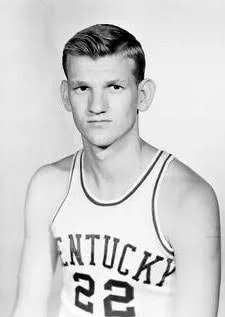
Start with Jerry and a basketball court. His Corbin teams reached three consecutive Sweet Sixteen tournaments, and the KHSAA credits his high school career with 90 victories against 15 defeats. Those results describe sustained success. Getting to the state tournament once can define a season. Returning repeatedly means surviving the pressure of expectations and giving opponents another chance to end the run. Jerry helped keep Corbin in that statewide conversation.
Basketball also gave the family its first Kentucky varsity chapter. Jerry played for Adolph Rupp, entering a program where individual ability had to find its place within demanding team expectations. His college career included Kentucky's unbeaten 1954 team and conference championships in 1954 and 1955. Those affiliations connected a former Redhound to significant moments in the history of a program that already commanded attention far beyond Lexington.
Jerry's own production grew. Across his Kentucky career, he scored 713 points and collected 589 rebounds. In his final season, he averaged 16.2 points and 11.3 rebounds. Those figures describe a player contributing through more than occasional scoring. Rebounding requires repeated involvement in possessions, including the ones that never produce a memorable photograph. A missed shot still offers somebody an opportunity to change what happens next.
His most striking college rebounding performance came against Iowa on March 17, 1956. Jerry gathered 24 rebounds in an NCAA Tournament game. Kentucky's remembrance of him in 2017 identified that total as the school's tournament record, still standing more than six decades later. The date matters because it places his achievement within a particular game, rather than allowing it to dissolve into a general claim that he was great.
A record like that makes the past easier to grasp. Modern fans understand how difficult it is for one player to control a crowded rebounding area. They understand what an extra possession can mean in March. They can look at 24 rebounds and recognize the work behind the number without having seen Jerry play. The game has changed, but the significance of repeatedly winning possession remains understandable.
Jerry reached professional basketball with the New York Knicks, and Kentucky retired his No. 22 jersey. He also entered the university's inaugural Athletics Hall of Fame class in 2005. After his playing career, he returned to Corbin and worked for American Greeting Card. That return belongs in the story alongside the honors. His connection to the town continued through ordinary working life, long after basketball stopped determining his daily schedule.
Calvin
A state championship, a state scoring record, and a kickoff return a nine-year-old never forgot.
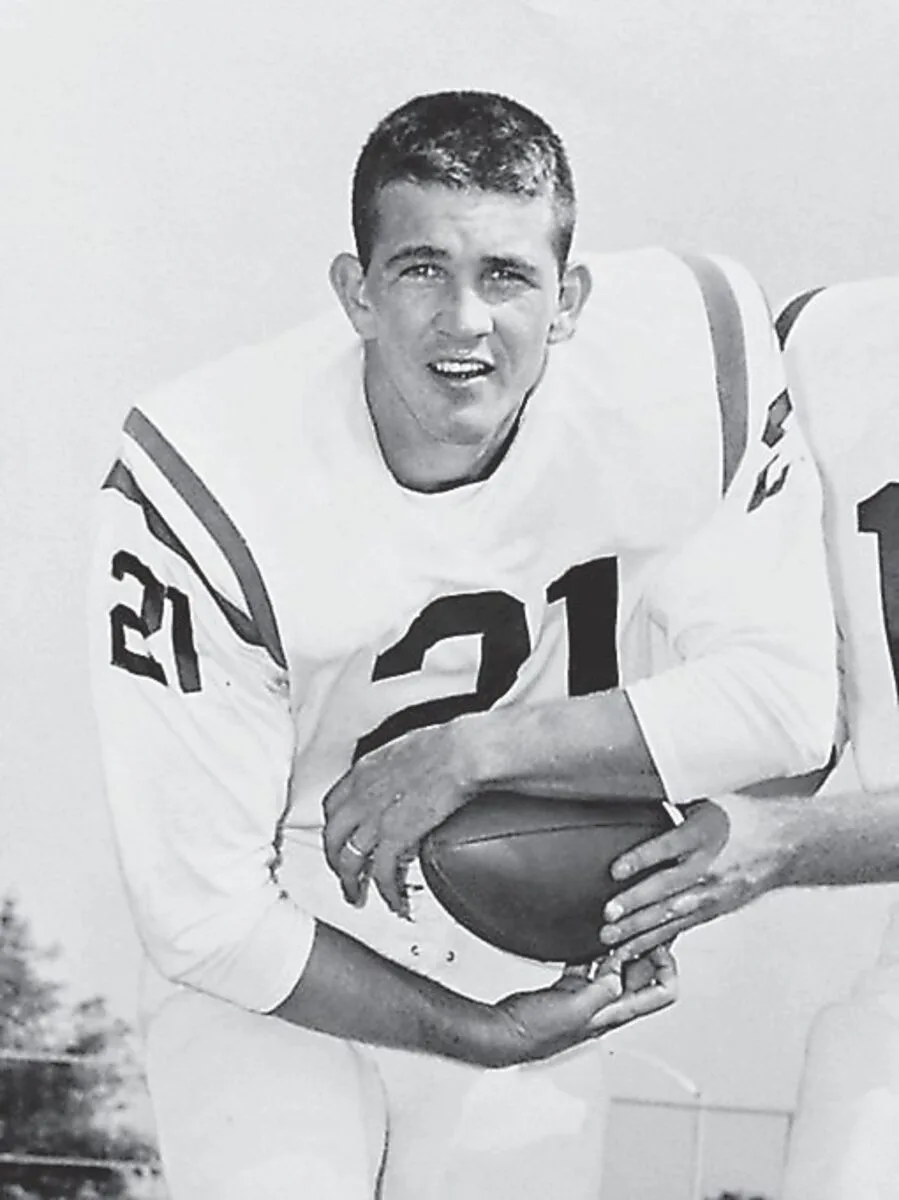
Calvin's place in Corbin memory begins with football but cannot be contained by one position. He helped lead the Redhounds to their recognized 1955 state championship, then scored 264 points in 1956, a state season record at the time. The first achievement links him to a celebrated team. The second reveals how frequently he personally reached the scoreboard. Together, they explain why his name became inseparable from that era.
The championship requires its historical context. Kentucky did not begin sanctioning its football playoffs until 1959. Corbin's 1955 recognition therefore came before the bracket that later generations would associate with a state title. Calling it a championship from the earlier recognition system describes the era accurately. It also allows the team to be remembered on its own terms, without pretending that its route matched the postseason journeys of later Redhounds.
The end of Calvin's 1956 season offers another useful reminder that even remarkable individual careers contain difficult afternoons. In the Recreation Bowl, Dixie Heights defeated Corbin 26 to 7 before a reported crowd of 6,000. Calvin scored the Redhounds' only touchdown, bringing his season total to 264 points. Across from him was Ron Ziegler, a Dixie Heights standout who later became President Richard Nixon's press secretary.
That intersection is an unexpected piece of history, but the football result deserves equal attention. Calvin's scoring record survived a team defeat. Greatness did not mean that every opponent disappeared or every important game ended in celebration. Including the loss makes the achievement more credible and the player more human. He was competing against other talented athletes, within a team sport whose outcomes could never belong to one person alone.
A nine-year-old in the stands, 1955Calvin returned the opening kickoff for a touchdown. What stayed with him was Calvin hurdling a would-be tackler near midfield. Decades later, the movement still lived in his memory.
Larry "Cotton" Adams, who would go on to play for Corbin, coach for Corbin, and lead the Redhounds to the 1982 state title. From a 2019 interview with Mike Fields for the KHSAA.
Adams eventually became a Corbin player, assistant coach and head coach. In 1982, he led the Redhounds to a state championship. His recollection creates a direct link between eras that can otherwise look separate on a history page. The child watching Calvin became part of the program's next chapters. One afternoon's excitement remained meaningful to a man whose own life would become deeply entwined with Corbin football.
It would be too simple to attribute an entire coaching career to one kickoff. Adams' life involved coaches, teammates, education, opportunity and his own decisions. Yet the remembered play still illustrates something important about local athletics. Children can see excellence at close range. The athlete inspiring them may attend their school, walk their streets and wear the same colors they hope to wear. Possibility becomes easier to picture.
At Kentucky, Calvin demonstrated how many ways a football player could contribute. The university's Hall of Fame biography describes his work as a runner, receiver, defensive back and return specialist. He led the Wildcats in receiving and all purpose yardage for three consecutive seasons. In 1958, he led the Southeastern Conference in receiving and earned the league's sophomore honor. His game extended well beyond the familiar image of a rushing star.
Kentucky also credits Calvin with averaging 8.44 yards each time he touched the football during his college career. Against Hawaii in 1958, he scored 25 points and matched the school record of four touchdowns in a game. The value of those details lies in their variety. They show a player whose opportunities came through different assignments and whose effectiveness could not be measured adequately by one column of a statistics sheet.
His versatility invites a broader appreciation of the athlete behind the reputation. A receiver must understand space differently from a runner taking a handoff. A returner must judge a developing field while the coverage closes. Defense requires another set of decisions altogether. Calvin's responsibilities suggest why a complete account of his career should include the less familiar roles, alongside the touchdowns that made his name easy to remember.
Calvin also left his mark on the rivalry with Tennessee. In 1959, he scored three touchdowns as Kentucky defeated the Volunteers 20 to 0. One came on a long punt return, a reminder that his influence could arrive even when the offense was standing on the sideline. For Kentucky supporters, a performance against Tennessee gave his achievements a setting whose emotional significance required very little explanation.
Rivalry games give statistics a different weight. Fans may forget an ordinary season total while remembering who delivered against the opponent they most wanted to beat. Calvin's contribution gave Corbin another connection to the wider loyalties of Kentucky football. A player people had known as a Redhound was now shaping an afternoon that mattered to supporters across the state. The hometown story and the college story had become part of the same experience.
When Calvin died in 2013, more than 250 people attended a memorial gathering at Central Baptist Church in Corbin, according to the News Journal. The attendance reflected relationships extending beyond the years he played. Friends, relatives, former teammates and admirers gathered in a place where an athletic reputation could be considered alongside a life. Such occasions reveal what survives after the record books have finished counting.
The newspaper's account included remembrances of Calvin's humility and competitiveness. It also recorded an appeal to younger people to understand what earlier generations had accomplished. That is an important distinction. Remembering a player need not become an argument that everything was better in his day. It can instead offer a fuller picture of what somebody from the same community achieved, and what others valued about him afterward.
Billy
Ten touchdowns. Six extra points. One game. And twelve varsity letters that say it was never only one game.
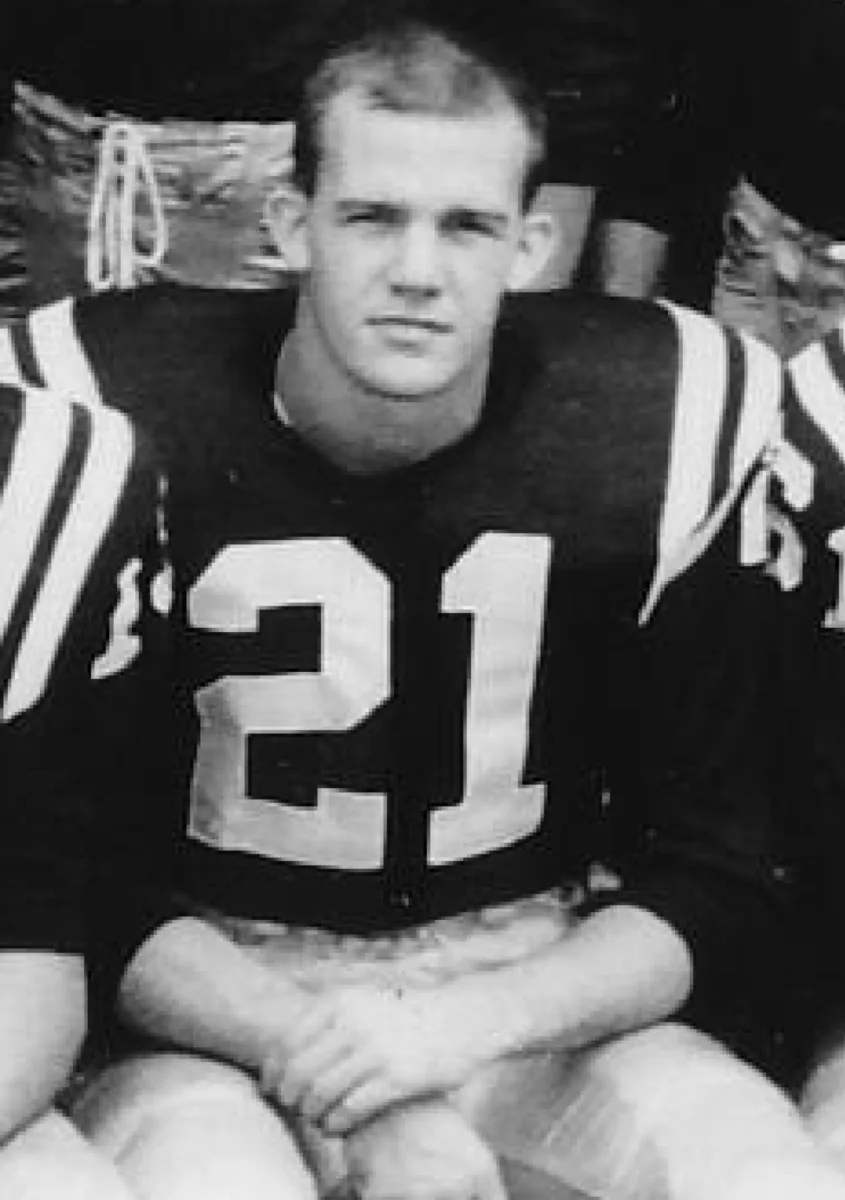
Billy's story brings the focus back to an extraordinary high school athlete whose achievements deserve attention in their own right. He earned 12 varsity letters across four sports at Corbin and received state recognition in basketball and track as well as football. His range is easy to overlook when one football game supplies such a spectacular headline. Yet the breadth of his participation is essential to understanding his athletic career.
Those 66 points against Williamsburg will always command attention. They should. Ten touchdowns by one player are difficult to imagine even when the arithmetic is simple. But a single performance, however unusual, cannot describe everything an athlete contributed to his school. Billy's career asks the reader to hold both ideas together: the exceptional game that made him memorable and the sustained involvement that made him valuable across several teams.
The state record book provides another way to appreciate Billy's afternoon against Williamsburg. Its individual scoring list places his 66 points alongside performances by players from many different generations. Another Corbin name appears there: Caleb Watkins, credited with 50 points against Knott County Central on October 8, 2009. Seeing those entries together connects achievements separated by decades through the same school name.
That comparison need not become a contest between eras. Different teams faced different opponents under different circumstances. What the record supplies is a shared reference point, allowing a fan who remembers Watkins to understand why Billy's performance still deserves attention. History becomes more accessible when an older achievement can be placed beside something a reader already knows, while leaving each game's circumstances intact.
At Kentucky, Billy's varsity football record included 17 carries for 79 yards in 1961. His college numbers were smaller than those of Calvin and Rodger, a difference that should be stated plainly without allowing it to diminish his Corbin achievements. Careers develop differently. Reaching the same university does not guarantee the same role, opportunities or results. Billy's place in this family history rests on his own record.
That perspective matters whenever a famous family is remembered. It is tempting to arrange siblings into a ranking and let the most celebrated career define the others. Doing so can flatten a useful, interesting story. Billy was a college football player and an exceptional Redhound athlete. His accomplishments remain substantial without borrowing anything from his brothers, and his presence helps show just how much athletic ability existed within one family.
Rodger
An unbeaten season at Corbin, a 92-yard introduction at Kentucky, and a Super Bowl start for the Raiders.
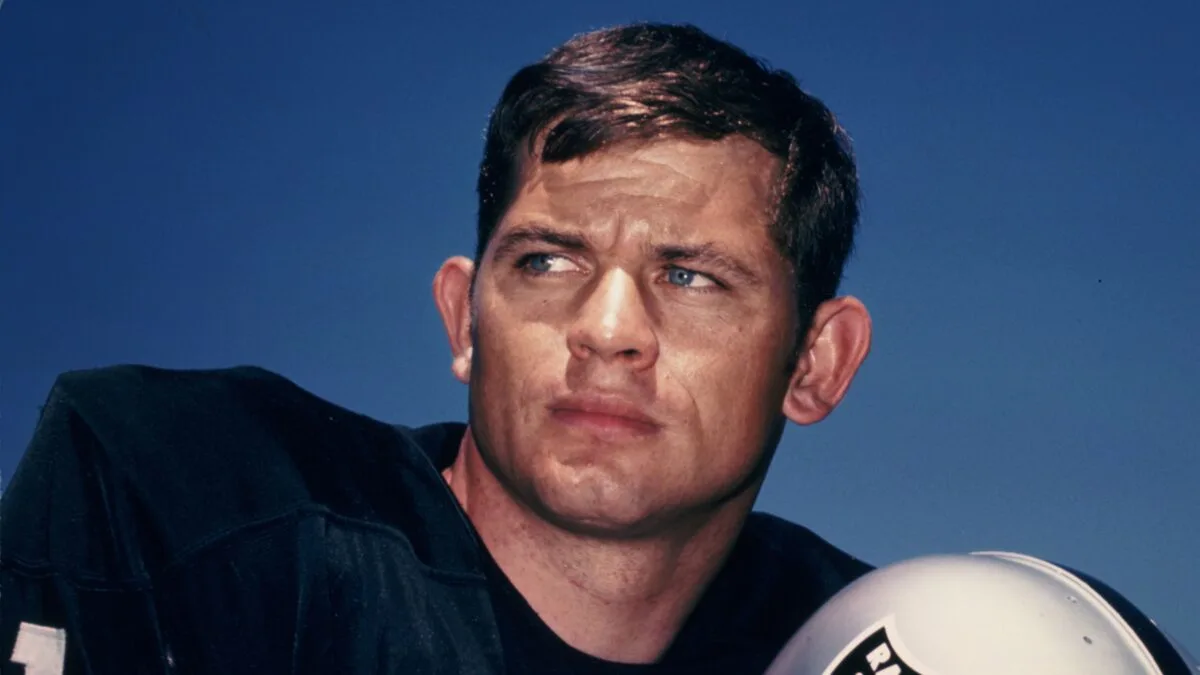
Rodger, the youngest brother, inherited a recognizable surname but still had to build his own career. His high school record included 212 points during the 1960 football season and participation in basketball and track. Corbin finished that football season undefeated. A perfect record creates its own pressure as autumn progresses, because every remaining opponent has a chance to become the team that finally stops it.
The Redhounds closed the season by defeating Louisville Manual 46 to 34. Nevertheless, they did not reach the playoffs under the Dickinson ratings system then used to determine qualification. The result is an important reminder for anyone reading old seasons through modern expectations. An unbeaten record did not automatically produce the postseason opportunity today's fans might assume. Corbin's achievement and its exclusion belong together in the account of 1960.
Rodger's arrival in Kentucky's varsity lineup supplied a moment that needs little embellishment. On his first collegiate play against Virginia Tech, he returned a kickoff 92 yards for a touchdown. Before a defense could study him over several possessions, he had already crossed the field. The nickname "Corbin Comet" had an obvious fit for a player capable of introducing himself through that kind of immediate, decisive speed.
The play also offers an opportunity to remember the teammates around a famous runner. A review of Gary West's book, The Boys from Corbin, recounts the return and identifies blocks by Herschel Turner and Bobby Kosid. Their names help restore the structure behind the highlight. Rodger supplied the finish, but the opening depended on other players doing their work. Even the most memorable individual run remains a team play.
During his Kentucky career, Rodger rushed for 1,699 yards and 21 touchdowns while accumulating 3,333 all purpose yards. He earned first team conference recognition in 1964 and 1965, with national honors following in 1965. Those accomplishments gave the opening kickoff a larger context. The dazzling introduction became the beginning of a productive career rather than a solitary moment recalled because nothing afterward matched it.
He could produce an equally dramatic change of direction on defense. Against Auburn in 1964, Rodger returned an interception 95 yards for a touchdown. Such a play reverses the meaning of a possession within seconds. One team begins with the ball and a chance to score. The other ends with the points. Rodger's college record included five interceptions, evidence of responsibilities extending beyond the offensive opportunities for which he was celebrated.
Oakland drafted Rodger in 1966, and he spent three seasons with the Raiders as a defensive back and returner. The professional role is worth noting because it differed from the running back identity central to many accounts of his Kentucky career. His route forward depended on the broader skills he could offer. The same athlete who scored college rushing touchdowns was asked to prevent professional opponents from reaching the end zone.
In the 1967 AFL Championship Game, Rodger started at safety as Oakland defeated Houston 40 to 7. That victory carried the Raiders into Super Bowl II against Green Bay. The setting placed a former Corbin player opposite Vince Lombardi's Packers, a team whose place in football history would become enduring. For Redhound fans tracing a hometown career, the distance from high school competition could hardly appear greater.
Green Bay won 33 to 14. Oakland's defeat remains part of Rodger's story, just as the championship that preceded it does. Reaching the Super Bowl did not guarantee the ending anybody supporting him would have preferred. It did establish that a player developed in Corbin had reached a starting assignment in professional football's showcase. The achievement stands without requiring the final score to be changed into something more comfortable.
Rodger's professional career also reminds readers how quickly opportunity can narrow. Reporting after his death described two shoulder surgeries and a playing career that ended after the 1968 season. Three seasons can look brief on a career summary, yet those years contained a league championship and a Super Bowl appearance. Duration and significance are different measures. A shorter career can still contain experiences that remain part of football history decades later.
Rodger's Super Bowl connection later became the focus of a planned celebration at Corbin High School. In January 2016, the school announced that he would present an NFL Golden Football as part of the league's Super Bowl 50 recognition program. The honor connected participating players and coaches with the high schools they had attended, giving the professional game's anniversary a visible hometown dimension.
Corbin's announcement scheduled a school assembly, a presentation between basketball games and opportunities for Rodger to meet with student athletes. It also announced that the city was declaring Rodger Bird Week. The plans placed current students at the center of remembering an earlier graduate. His football career could become a subject for conversation with young people building their own experiences in the same school community.
That is a valuable way to treat an athletic legacy. A commemorative object can attract attention, but the conversation around it gives it meaning. Students can ask what came before them and recognize that their school's history extends beyond the seasons they remember. For Corbin, Rodger's connection to the Super Bowl offered a specific answer, embodied in a former Redhound whose career had carried the town's name to an extraordinary stage.
No single statistic captures the family.
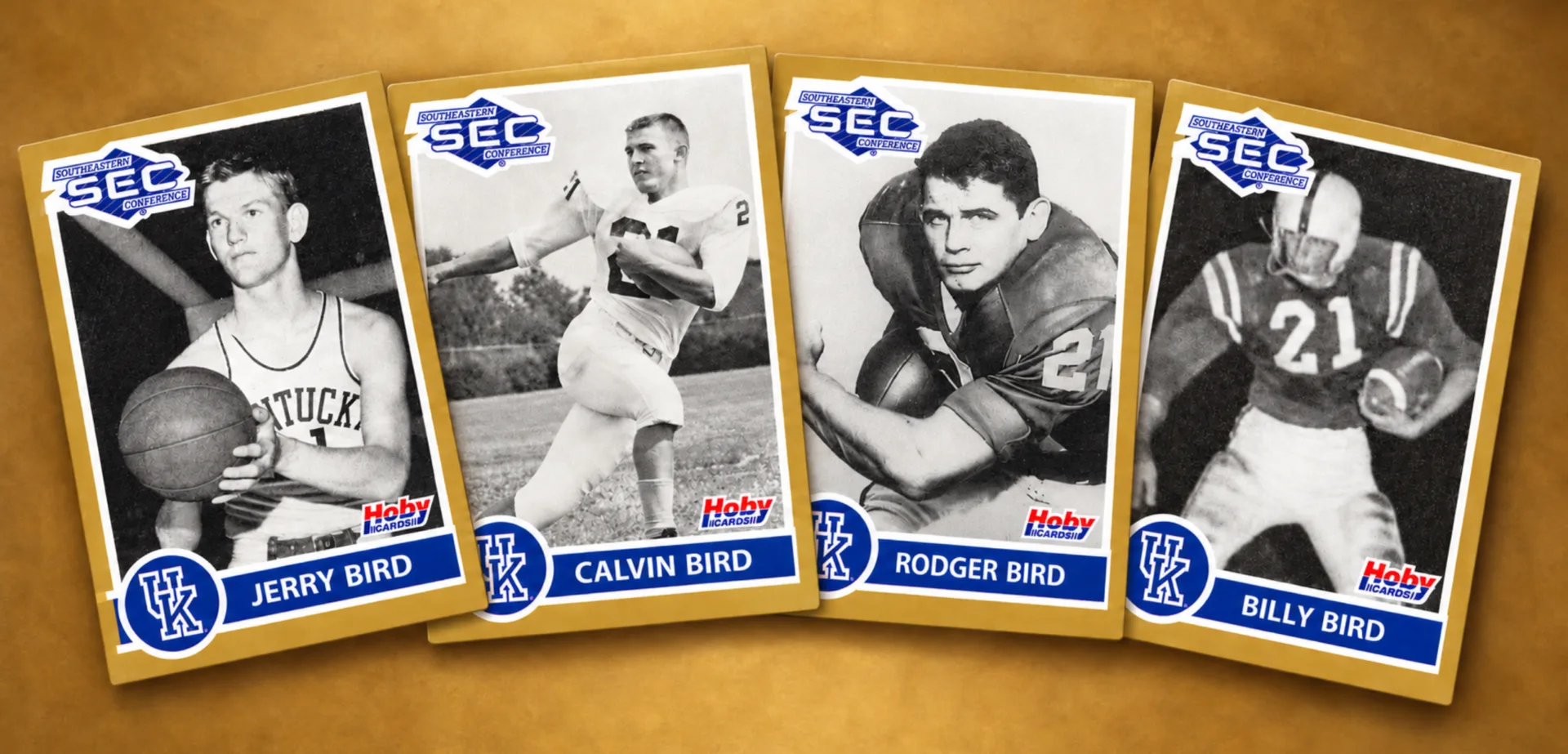
Looking across the brothers, no single statistic captures the family. Jerry's rebounds belong beside Calvin's versatility, Billy's scoring outburst and Rodger's professional championship experience. Their careers resist being reduced to one familiar image of a gifted athlete. They succeeded in different settings, faced different expectations and left different kinds of records. That variety makes their shared starting point in Corbin more interesting than any attempt to declare them interchangeable legends.
The KHSAA brought the four names together in its Hall of Fame class of 1993. The recognition offers a useful point of return after following the careers into college and professional sports. Kentucky honored their high school contributions together. Corbin was the common ground beneath the different achievements, the place where the public records of these athletic lives first took shape and where their connection remains easiest to understand.
What disappears when only the stars' names survive?
A touchdown total says little about the linemen. A tournament appearance needs a roster to reveal the teammates. A photograph can preserve a face but lose its meaning if nobody identifies the people standing nearby. Even a famous family's history becomes thinner when those surrounding details go missing.
That is why an old program or a carefully labeled photograph can matter. It can connect a recognizable name to a particular season and a particular group of people. A clipping may supply an opponent, a date or a coach. A teammate's recollection may explain an assignment that a box score never recorded. Each contribution can help turn an inherited reputation into a history that another generation can actually explore.
The goal should be to preserve the excitement without sacrificing accuracy. Records deserve dates. Recollections deserve attribution. Team accomplishments deserve the teammates. Those habits strengthen a story like this one because the documented achievements are already compelling. There is no need to invent conversations, imagine private motivations or make every season perfect. The Bird brothers supplied enough real accomplishment to reward attention without any help from exaggeration.
For CorbinRedhounds.com, that makes this family an invitation to keep looking. Somewhere, a reader may recognize a teammate in a photograph or remember where a program was stored. Someone may have watched Jerry rebound, Calvin return a kick, Billy cross the goal line or Rodger race into open space. Those memories become more useful when they are shared with names, dates and whatever supporting material has survived.
Four brothers carried Corbin into Kentucky athletics and beyond. Their careers reached different heights in different ways, but the beginning remained the same. Before the retired jerseys, before the professional uniforms and before the Super Bowl, there were Redhound teams and young athletes building their records one game at a time. Preserving that beginning gives future fans something more lasting than a familiar surname. It gives them the story behind it.
Have photographs, programs or memories of the Bird brothers?
A team photo with names on the back. A program from 1955 or 1960. Three sentences about a kickoff you saw. All of it belongs here, with your name on it.
Share a photo or program → Share a memorySources named in the story: KHSAA Hall of Fame biographies and record book; University of Kentucky Athletics Hall of Fame biographies and the university's 2017 remembrance of Jerry Bird; the KHSAA's 2019 interview with Larry "Cotton" Adams by Mike Fields; the News Journal; Corbin High School's January 2016 announcement; and a review of Gary West's The Boys from Corbin.